

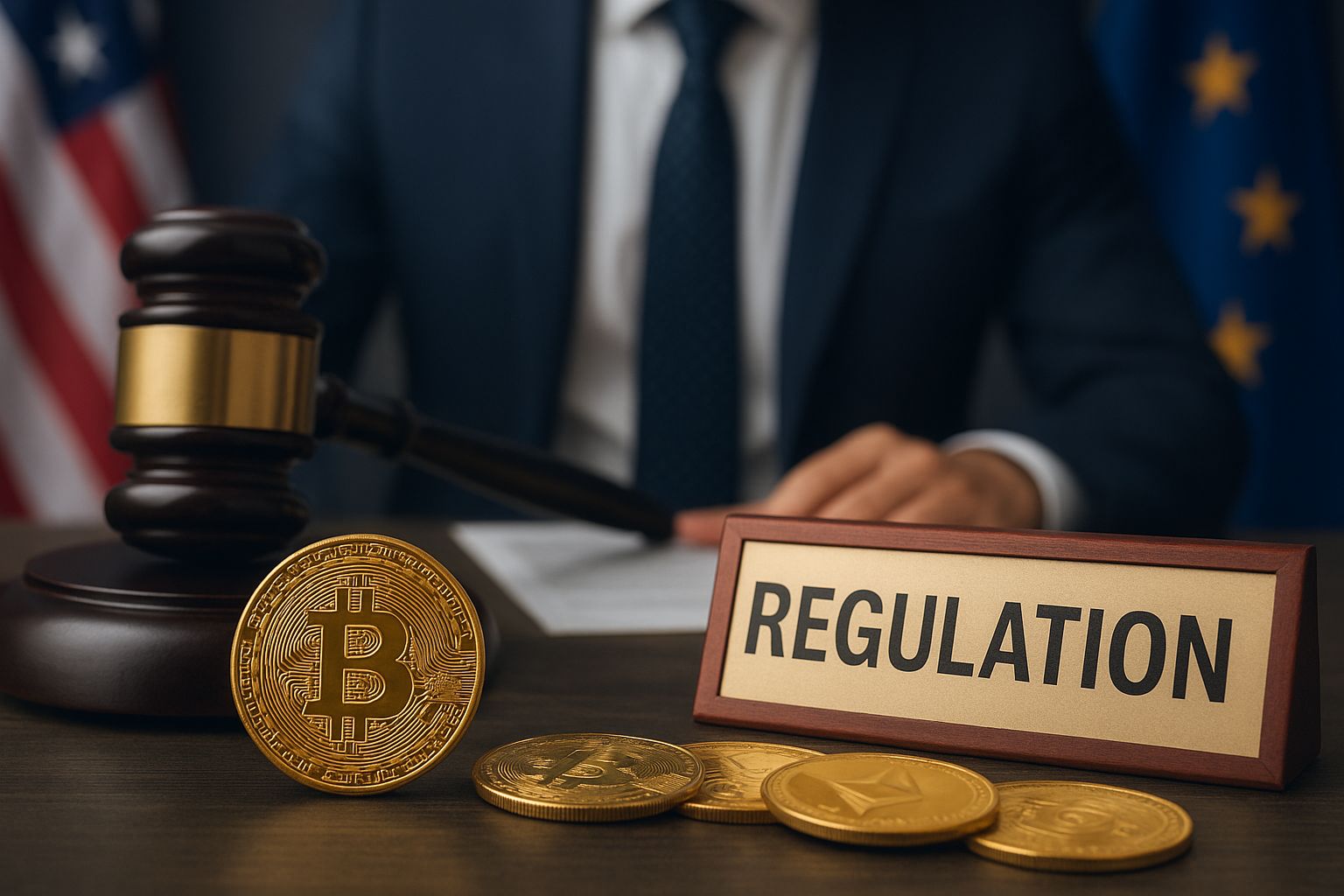
The rapid evolution of cryptocurrency markets has not only attracted investors but also caught the attention of global regulators. As these digital assets transition from their status as novel financial instruments to significant components of the broader financial system, stringent regulations are being introduced to ensure compliance and investor protection.
Recent regulatory trends across major economies signify a synchronized effort to establish comprehensive compliance frameworks for cryptocurrencies. Regulators in the United States, the European Union, and Asia have been proactive, each with distinctive strategies molded by their financial landscapes and regulatory philosophies. In the U.S., the Securities and Exchange Commission (SEC) and the Commodity Futures Trading Commission (CFTC) have intensified their focus on regulating crypto exchanges and Initial Coin Offerings (ICOs) as securities.
The European Union, on the other hand, is pioneering the Markets in Crypto-assets Regulation (MiCA) law, a comprehensive rulebook poised to direct the landscape of crypto-assets throughout member states. MiCA aims to enhance legal certainty, support innovation, and instill consumer protection by establishing a harmonized legislative framework applicable to all EU member states. The introduction of MiCA underscores the EU’s rigorous stance on curbing illicit activities and protecting investors in the digital finance space.
In Asia, countries like Singapore and Hong Kong are setting benchmarks through progressive and adaptive regulatory measures. The Monetary Authority of Singapore (MAS) has launched stringent licensing requirements and ongoing supervision for crypto service providers, reflecting its dual focus on innovation and risk management. Meanwhile, Hong Kong’s Securities and Futures Commission (SFC) has introduced regulations requiring crypto trading platforms to secure operational licenses, ensuring their adherence to financial security standards.
These regulatory developments present both challenges and opportunities for companies operating within the crypto ecosystem. Compliance is a pivotal concern, necessitating a significant shift from the traditional norms of decentralized finance. Companies must now enhance their compliance frameworks to meet evolving regulatory expectations, which include mandatory Know Your Customer (KYC) processes, anti-money laundering (AML) measures, and transparent reporting practices.
Several crypto firms are integrating advanced compliance technologies such as AI-driven analytics to manage the complexities of regulatory adherence. This technological adoption not only facilitates efficient compliance but also aids in identifying potential risks within crypto transactions, thus fostering a secure trading environment.
In conclusion, the future of the cryptocurrency market hinges on how well entities within the ecosystem adapt to the tightening regulatory environment. As global efforts to regulate digital currencies intensify, crypto companies that proactively embrace compliance will gain competitive advantages while contributing significantly to the market’s long-term stability.